FaceTiersAll tools

Attractiveness Test

Free attractiveness test that measures canthal tilt, jaw angle and facial thirds from 478 points on your face, in your browser, and gives a total from 1 to 8. Your photo never leaves your device.

Front-facing, one face

Measured on this device. Nothing is uploaded.18+ only.

What the attractiveness test gives you

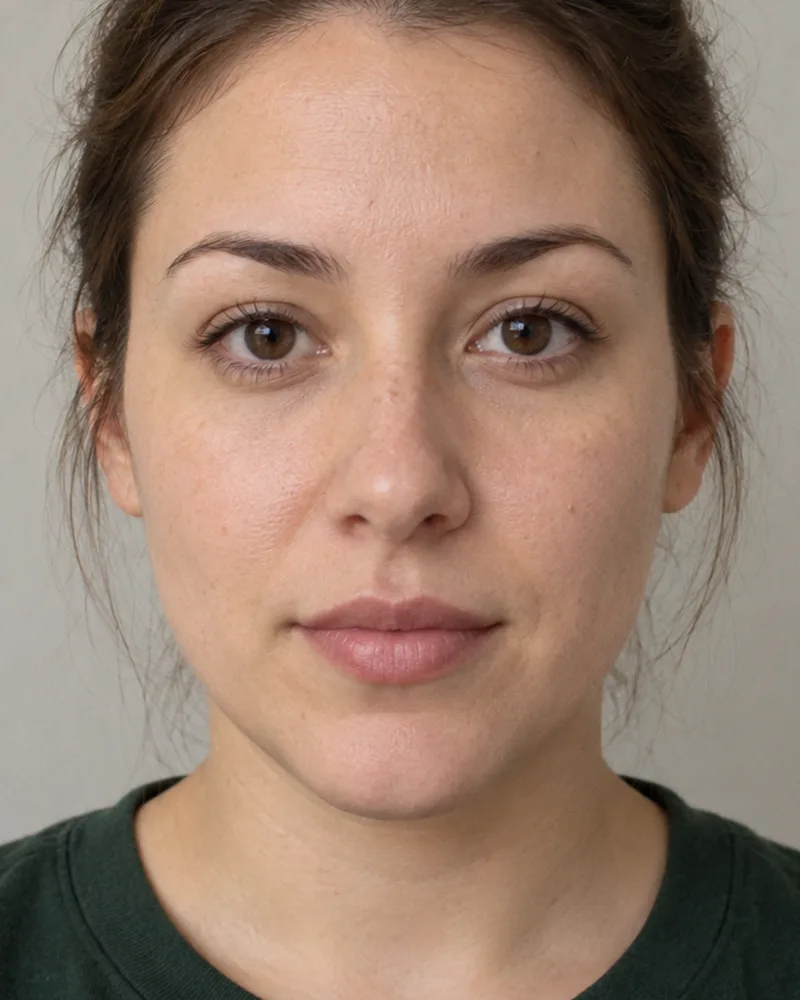
Your photo with the measured points and lines on it, a total on a 1–8 scale, its band and the measurements of your face. This card is an example, drawn on a generated face.

EXAMPLE

Example face: a woman looking straight at the camera, neutral expression, plain wall behind

4.0

Balanced

Second of four bands. 1–8 scale, measured from 478 points.

Light, camera height and expression can move this score by about a point from one photo to the next.

  1. Rising
  2. Balanced
  3. Sculpted
  4. Striking
Canthal tiltouter corners sit above the inner
+6.0°
Jaw angleangle at the corner of the jaw
143°
Facial thirdsupper, middle, lower, in percent
20 · 41 · 39 %

facetiers.comphoto never uploaded

One-time PDF · US$9.90

Your improvement plan

  1. IYour improvement plan, ranked by where to start
  2. IIA 4-week schedule, week by week
  3. IIIWritten by an AI model from your measurements only. No photo is sent.

US$9.90, paid once. Not a subscription: nothing renews.

How the attractiveness test works

  1. Choose a photo of one face, looking at the camera.
  2. A face model running in your browser places 478 points on it. The first visit downloads the model once.
  3. The page measures canthal tilt, jaw angle and facial thirds from those points and draws them on your photo.
  4. You get a total on a 1–8 scale (to the nearest 0.5), its band and the measurements of your face. The page keeps the photo only while the result is on screen.

The photo is read within 5° of straight, and the face must be at least 160 px wide in the picture.

The four bands of the attractiveness test

Cut points are z-scores against a reference set of 35 portraits of 14 people; each band covers a quarter of that scale. They are not percentages of the general population. The band is read from the unrounded score, so a total shown as 3.5, 4.5 or 5.5 can fall in either of the two bands next to it.
BandPlaceOn the reference scaleOn the 1–8 scaleShare of the scale
RisingFirst of four bandsbelow −0.67below 3.725%
BalancedSecond of four bands−0.67 to +0.003.7 to 4.525%
SculptedThird of four bands+0.00 to +0.674.5 to 5.325%
StrikingFourth of four bandsabove +0.67above 5.325%

Questions and answers

How does the attractiveness test work?

You choose a photo. A face model running in your browser places 478 points on it, and the page measures three things from those points: canthal tilt (the angle of the eyes), jaw angle, and facial thirds (how the height of the face splits into upper, middle and lower). The result is compared with a reference set of 35 portraits of 14 people, which gives a total on a 1–8 scale (to the nearest 0.5) and one of four bands: Rising, Balanced, Sculpted or Striking. It measures geometry; it does not judge you.

Is my photo uploaded anywhere?

No. The photo is opened and measured in your browser, and the face model is downloaded once to your device and runs there. FaceTiers sends no photo and no face points to a server. While your result is on screen the page keeps a copy of the photo in this tab's memory, so it can redraw the result and the two images you can save; the copy is dropped when you choose another photo, reload or close the tab.

Why does my score change between photos?

Faces move: a head turned a few degrees, a smile, another lens or other light changes the points the model finds. In our tests on 35 official portraits of 14 people, canthal tilt and jaw angle were the only measurements that varied less for the same person than between different people. From those tests we estimate that the total of one person can move by about a point from photo to photo, and a selfie can move more. That is also why the page asks for a face within 5° of straight.

What is a good score on an attractiveness test?

There is no standard. Here the bands are Rising below 3.7, Balanced 3.7 to 4.5, Sculpted 4.5 to 5.3 and Striking above 5.3. Those cut points split a reference set of 35 portraits of 14 people into quarters; they are not percentages of the general population, and a higher number is not a verdict on you.

Can an AI rate how attractive someone is?

Some models are trained to predict the average of what people rate in a photo. That is an average opinion, not a fact about a face. FaceTiers does not predict opinions: it measures three things on your photo, combines them with the others it reads into one total, and places that total against a small reference set. The number is a description of proportions in one photo.

Can I take the attractiveness test with a webcam or a selfie?

Choose a photo opens your photo library or file picker, and on most phones it also offers the camera, so you can take a selfie. There is no live webcam mode: the page measures one still photo, straight on.

Is the attractiveness test free? What do I pay for?

The test, the total, the band and the measurements of your face are free, and the free test never asks for payment or an email address. An optional improvement plan, a one-time PDF written by an AI model from your measurements, costs US$9.90 once: it is not a subscription and nothing renews.